
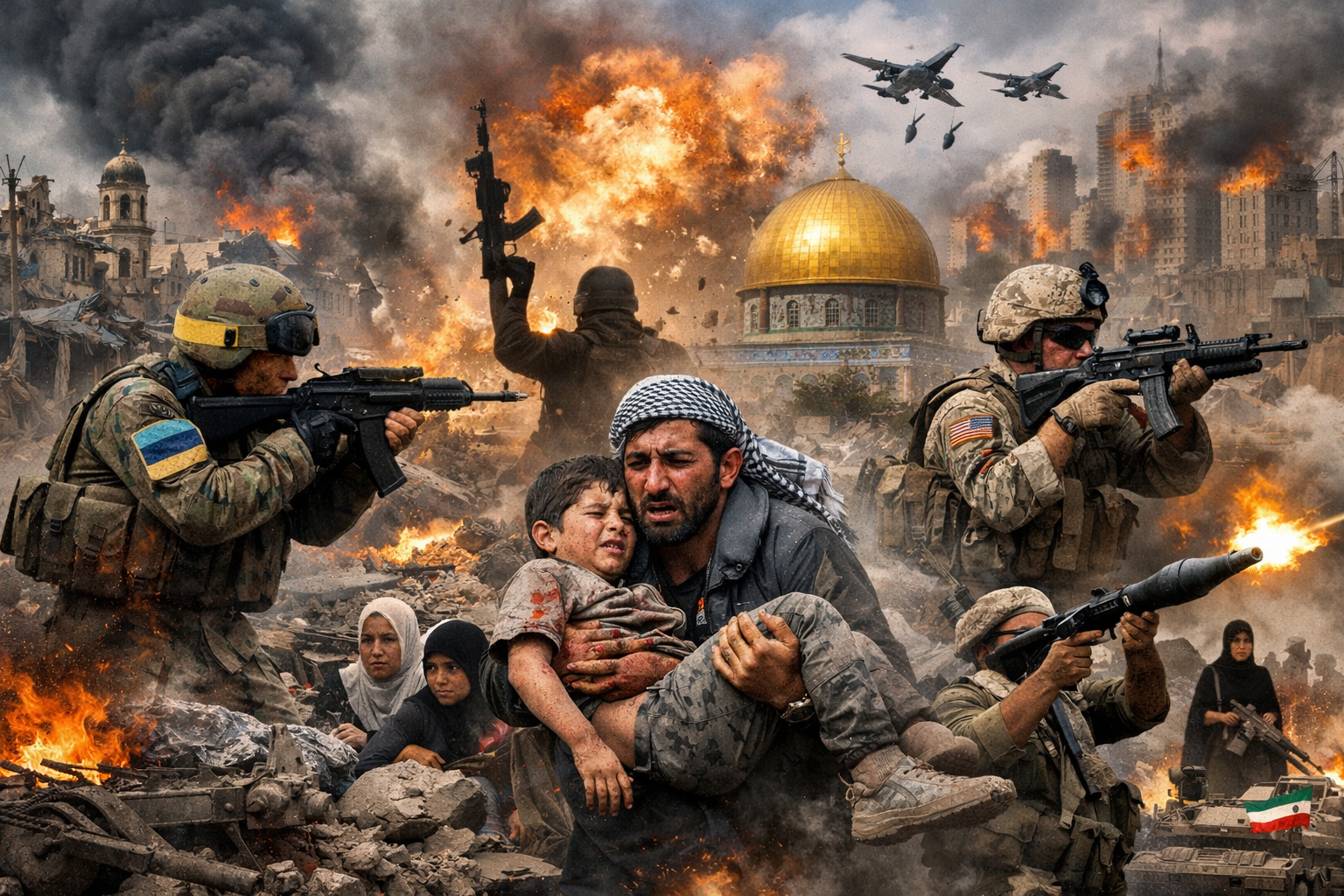
Here is a comprehensive news analysis of the global war and conflict situation, covering key active wars, emerging tensions, humanitarian crises, and geopolitical implications.
1. Middle East: Israel-Hamas War and Iran-U.S./Regional Tensions
Conflict in Gaza (Israel–Hamas):
-
The war that began in October 2023 continues to shape Middle East instability, with repeated flare-ups despite periodic ceasefire efforts. The humanitarian toll remains high, infrastructure destruction is widespread, and international pressure for sustainable de-escalation persists.
Iran on the Edge of Wider Conflict:
-
Iranian leadership has issued stark warnings that any attack on Supreme Leader Ayatollah Ali Khamenei would be treated as a declaration of war, underscoring escalating U.S.–Iran tensions. The backdrop includes mass protests in Iran, heavy domestic repression, and renewed calls by some external actors for intervention.
-
Independent reports indicate Iranian unrest has intensified, with internet blackouts and large-scale protests, signaling serious internal instability that could affect regional geopolitics.
U.S. Diplomatic Initiatives and Risks:
-
The United States has initiated a “Board of Peace” aimed at conflict resolution, inviting India and other nations to participate — a diplomatic extension focused initially on Gaza.
-
However, broader U.S. foreign policy under the current administration continues generating volatility, with analysts warning of potential for wider confrontation with Iran if rhetoric intensifies.
2. Africa: Sudan’s Civil War and Broader Instability
Sudanese Civil War:
-
War between the Sudanese Armed Forces (SAF) and the Rapid Support Forces (RSF) has reached its 1000th day, marking one of the worst humanitarian crises in recent memory. Millions are displaced, food insecurity is catastrophic, and basic services have collapsed.
Humanitarian Conditions:
-
Aid agencies highlight severe malnutrition, blocked aid corridors, rampant gender-based violence, and widespread displacement into neighboring countries.
Regional & Strategic Implications:
-
The Sudan conflict remains a top crisis globally due to its scale, with external actors sometimes exacerbating rather than mediating the war.
3. Europe: Russia–Ukraine War
Ongoing Combat and Shifting Frontlines:
-
The war persists with continued Russian offensives and slow territorial shifts. Russian forces have seized additional land, while Ukrainian defense and counter-strike efforts remain persistent.
International Military Aid:
-
Western allies, including the UK, are expanding military support (e.g., drone production and potential multinational forces), signaling long-term strategic commitments even as battlefield dynamics grind on.
Strategic Fallout on Alliances:
-
The conflict has weakened Russia’s global standing and strained alliances, with analysts suggesting waning support from some traditional Russian partners and domestic dissatisfaction.
4. Yemen and the Middle East Civil Wars
Southern Yemen Campaign:
-
The recent Southern Transitional Council (STC) offensive and subsequent Yemeni government counter-offensive illustrate ongoing fragmentation within Yemen’s prolonged civil war. The STC briefly controlled significant territory before government recapture.
Wider Implications:
-
Yemen remains a proxy battleground involving Saudi Arabia, the UAE, and local factions, complicating regional security and humanitarian access.
5. Other Global Flashpoints and Emerging Risks
India-Pakistan Tensions:
-
Strategic analysts warn of a moderate risk of renewed armed conflict between India and Pakistan in 2026, driven by unresolved territorial disputes and episodic terrorist activity — signaling one of the more dangerous South Asian flashpoints.
Sahel and West Africa:
-
Nations in the Sahel have increased joint military efforts against Islamist insurgencies, signaling both regional solidarity and the entrenched nature of violence in West Africa.
Myanmar & Protracted Internal War:
-
Myanmar continues to suffer prolonged internal conflict, intensified by natural disasters and economic collapse, with millions in need of aid and rights abuses compounding the crisis.
6. Strategic and Humanitarian Overview
Record Levels of Conflict:
-
Independent research indicates that the number of armed conflicts worldwide has reached post-World War II highs, with dozens of simultaneous wars and indirect involvements in numerous countries.
Humanitarian Consequences:
-
International humanitarian bodies (e.g., ICRC) note severe erosion of civilian protection, shrinking space for neutral aid, and the normalization of violence across conflict zones.
Civilian Impact:
-
Tens of millions of people are displaced, millions face starvation or deprivation, and access to healthcare, education, and basic services is severely compromised in multiple theaters of war.
7. Global Geopolitical Implications
Alliance Strains:
-
Strains within traditional alliances (e.g., NATO) and shifting U.S. foreign policy priorities present risks of diplomatic fragmentation that could embolden revisionist powers.
Great Power Competition:
-
Conflicts in Europe and the Middle East increasingly intersect with broader geopolitical competition among major powers (U.S., Russia, China), complicating conflict resolution and raising the stakes of proxy confrontations.
Summary Assessment
As of January 2026, the global conflict landscape remains highly volatile and multifaceted. Traditional interstate wars (Russia–Ukraine), irregular insurgencies (Sudan, Yemen, Myanmar), and persistent regional wars (Israel–Hamas, Iran tensions) converge with emerging geopolitical risks. Humanitarian consequences continue to worsen, with civilians bearing the brunt of protracted fighting. Global security dynamics suggest that without sustained diplomatic engagement and conflict prevention measures, the trajectory of violence is likely to persist or further escalate through 2026.